Start with the object that gives the surface a job: a hook, tray, runner, mat, or bookend.
ADVANINCH ONE
Styling handbook
A practical room-by-room guide for placing small accents with enough function, material contrast, and negative space to make each surface feel finished.
Add one material contrast, such as linen against ceramic or glass beside wood.
Leave visible space around the arrangement so the room feels lived in, not staged.
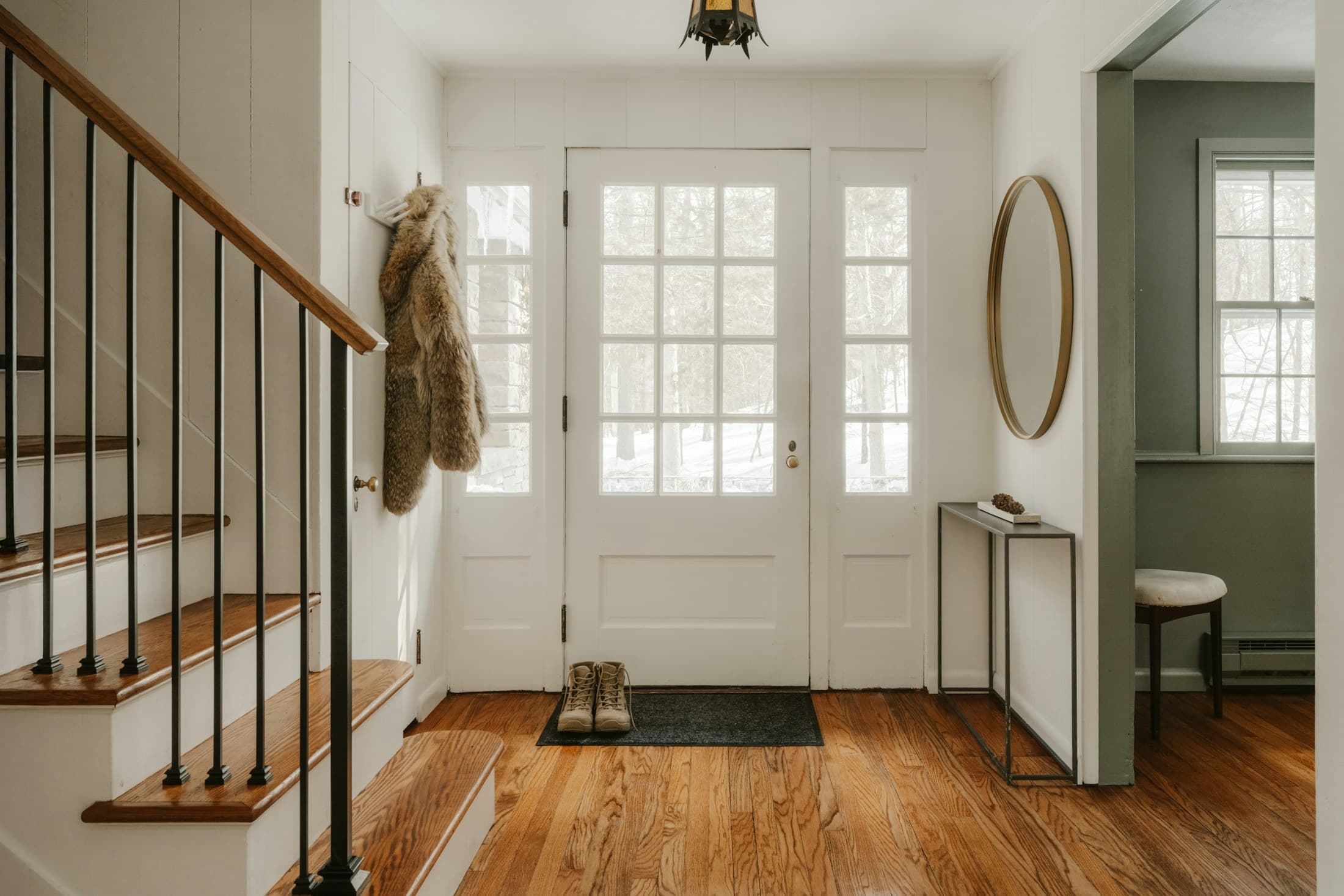 One vertical anchor, one catchall, one weighted object.
Entryway
The first five minutes home
Treat the entry as a landing sequence, not a display. Wall storage catches the piece in your hand, a tray gathers the small items, and one grounded bowl keeps the surface from feeling scattered.
- Place the hook at shoulder height so keys, totes, or a light layer have an obvious home.
- Set a shallow ceramic tray below it for cards, keys, and the things that should leave again tomorrow.
- Finish with a darker bowl or stone-toned piece to visually hold the arrangement in place.
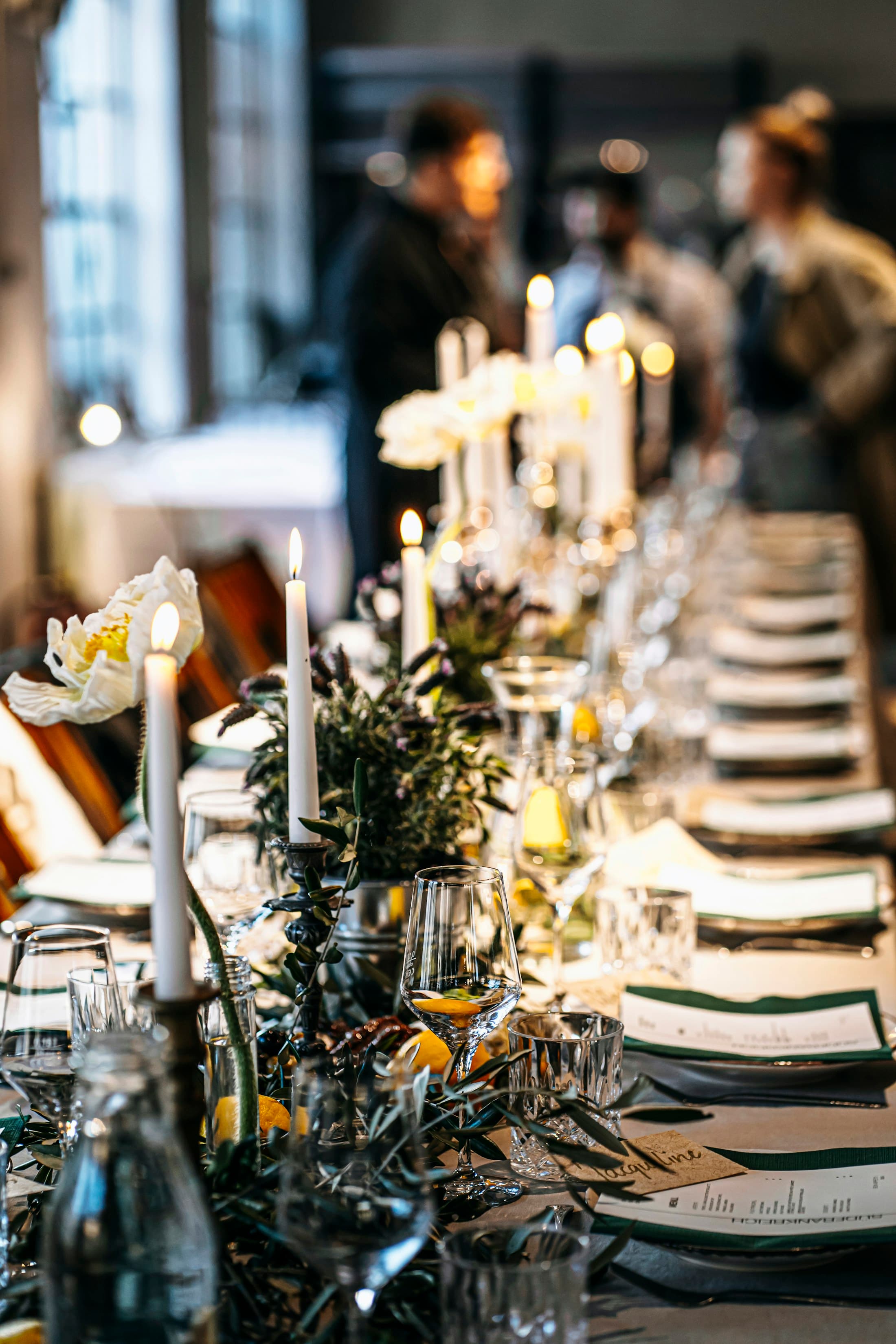 Keep the eye line open and repeat warmth once.
Dining table
A table that stays low and warm
A dining surface works best when the center line is calm enough to leave in place. Keep height low, repeat a warm metal once, and let linen create a soft runway for small vessels.
- Run linen lengthwise so the table has a quiet center without needing a full tablescape.
- Use a brass holder as the warm note, then avoid adding more than one competing metallic finish.
- Add a low ribbed vessel for texture, leaving open space around plates, glasses, and passing dishes.
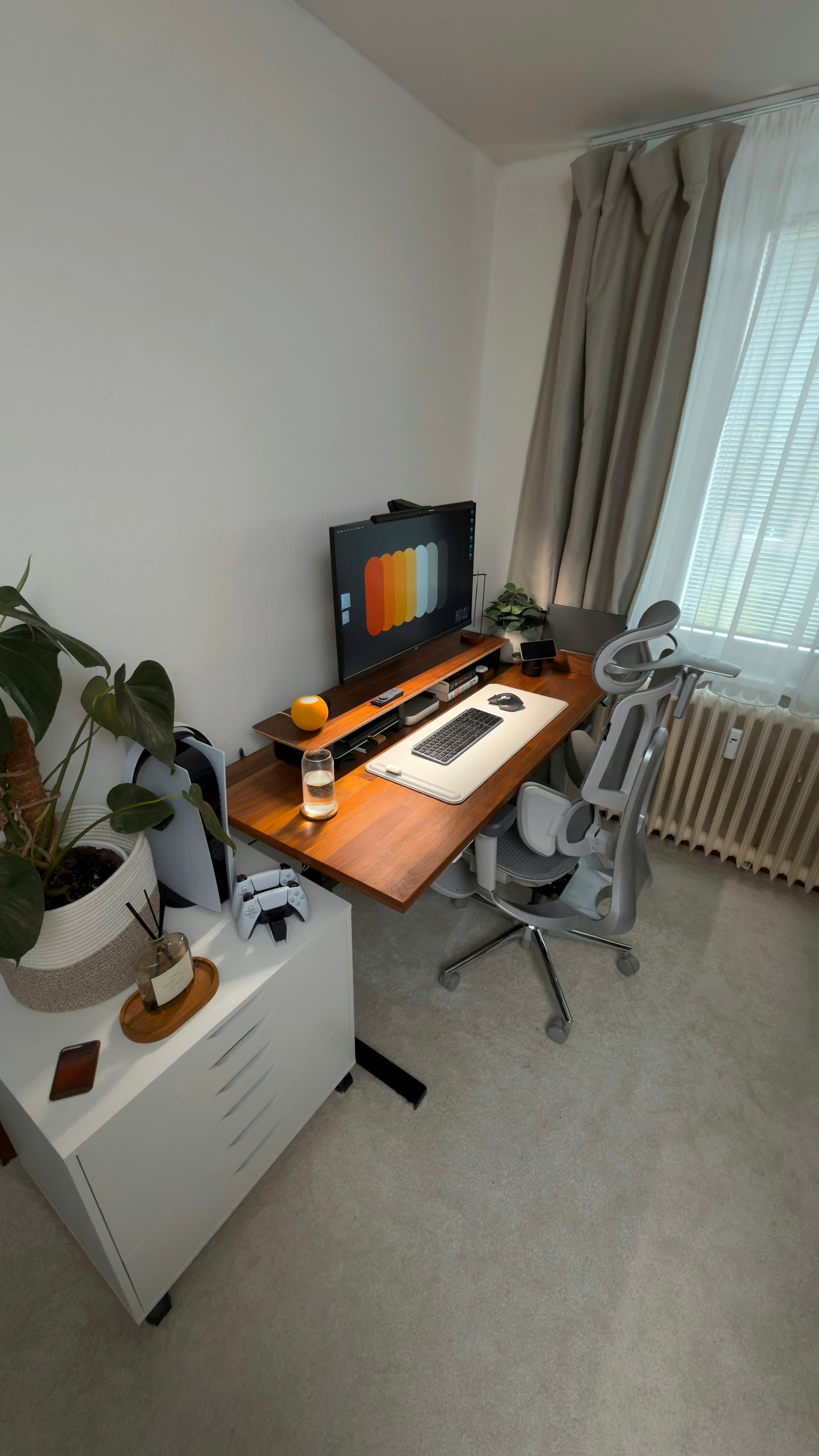 Define the work zone before adding decorative objects.
Workspace
The calmer desk edge
A desk should look edited without becoming precious. Start with a tactile base, give loose papers a visible rail, and hide the smallest technical clutter inside one ceramic piece.
- Use a linen mat to mark the writing area and soften laptops, notebooks, and daily tools.
- Keep one brass rail for the active paper you need to see rather than stacking multiple piles.
- Tuck cords, clips, or small adapters into a ceramic cove so practical clutter still has material presence.
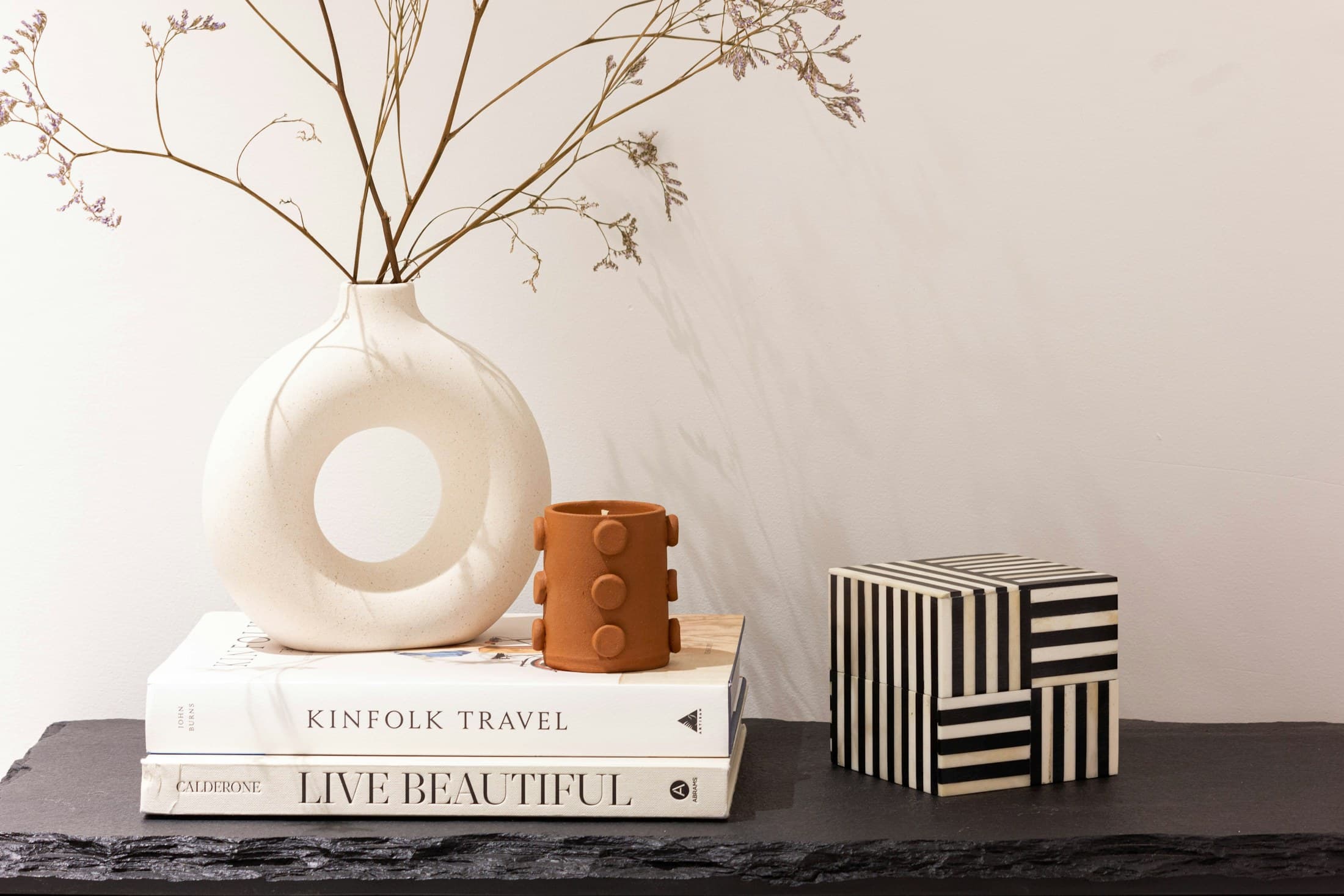 Balance one heavy shape with one transparent shape.
Living room
A shelf with breathing room
Open shelving needs negative space as much as objects. Let one transparent form sit between heavier pieces so the shelf feels collected instead of filled.
- Start with the bookend or sculptural object at one side to create visual weight.
- Place smoked glass slightly off center so it catches light without blocking the shelf behind it.
- Use a small green vessel as the living color note, then leave at least a hand-width of open space.